Image Processing Program in C
Image Processing Program in C
1. Project Overview
This project implements an image processing program in C, capable of handling both grayscale (PGM) and color (PPM) images.
It was developed as part of an academic assignment in Imperative Programming (2024-2025), with the goal of understanding low-level image manipulation and transformation techniques using the C language.
The program reads, processes, and writes images using custom-built modules and supports various transformations such as color conversion, brightness adjustment, inversion, level quantization, and image resampling (nearest neighbor and bilinear interpolation).
2. Objectives
- Implement basic image reading and writing for PPM and PGM formats.
- Understand and manipulate image structures, pixel data, and color channels.
- Apply a variety of transformations — e.g. brightness, inversion, quantization, blending, etc.
- Apply Look-Up Tables (LUTs) for pixel transformations.
- Implement arithmetic operations and resampling techniques on images.
- Provide a modular and maintainable codebase written entirely in C.
3. About PPM and PGM Formats
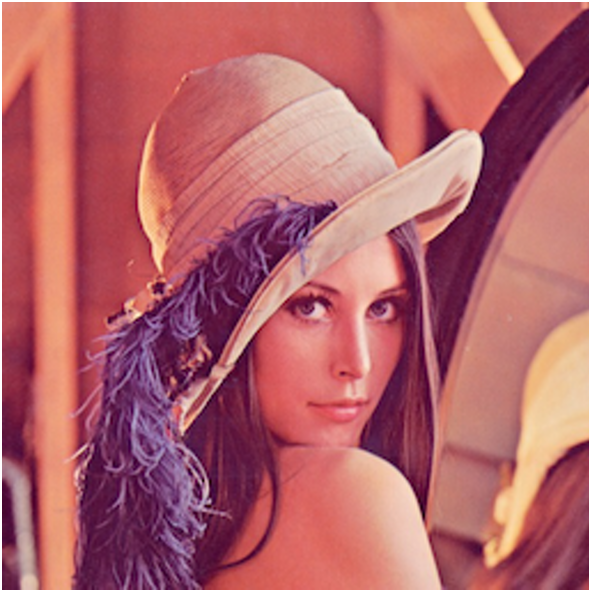
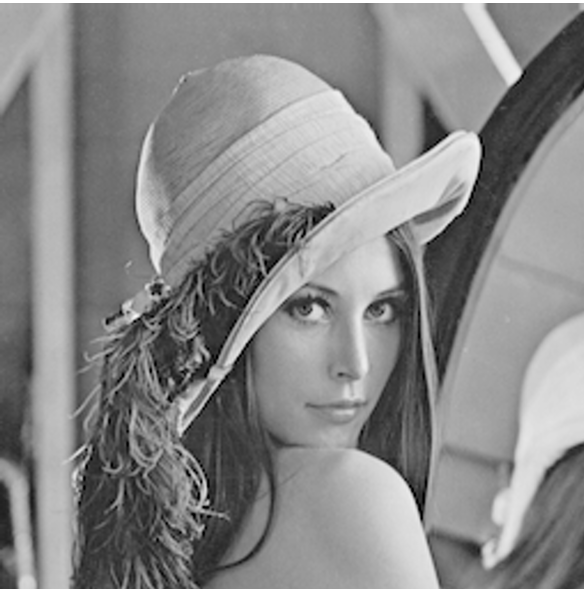
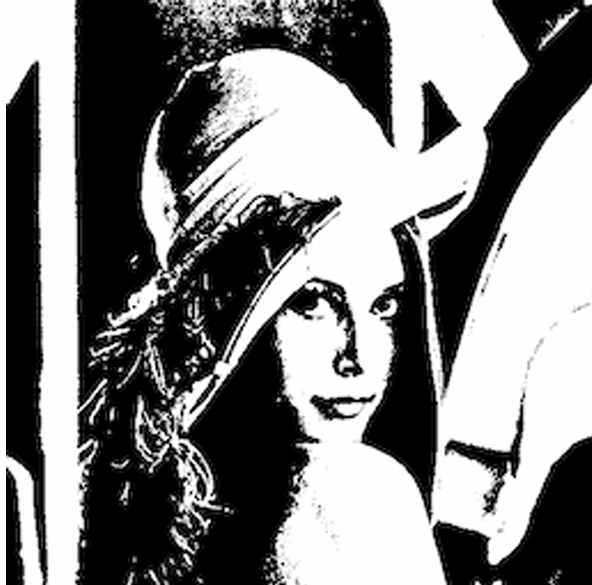
Both PPM (Portable Pixmap) and PGM (Portable Graymap) are simple image formats developed by Jef Poskanzer in 1988.
They are defined by a magic number — P6 for binary PPM and P5 for binary PGM — followed by image dimensions and pixel values ranging from 0 to 255.
- PGM (P5) → Grayscale images with one channel (intensity).
- PPM (P6) → Color images with three channels: Red, Green, and Blue.
| Color images(PPM) | Gray images(PGM) | Black images(PGM) |
|---|---|---|
 |  |  |
4. Implemented Features
The following operations are implemented and demonstrated in this project:
- Read and Write Image
- Convert Gray ↔ Color
- Split RGB Channels
- Brighten Image
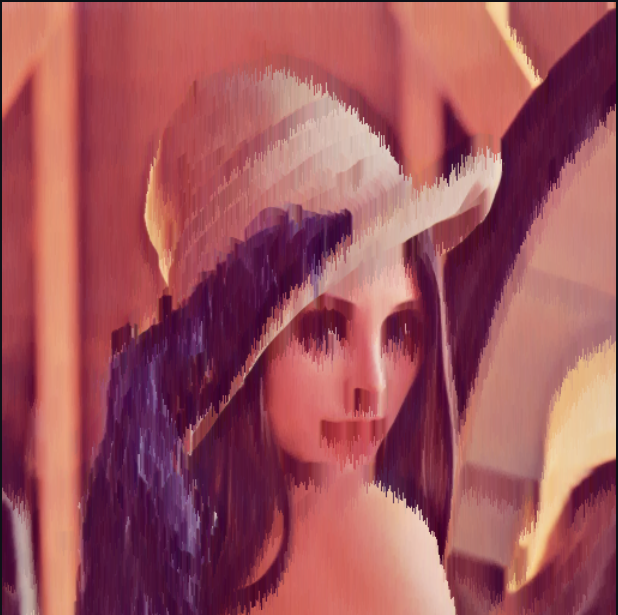
- Melt (pixel blending)
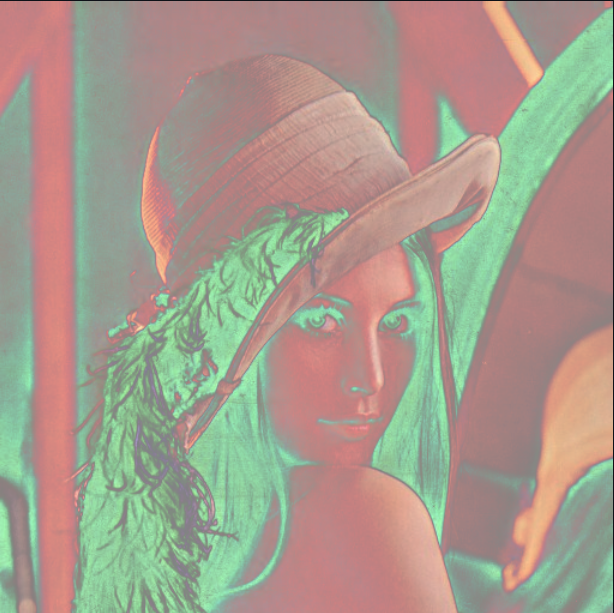
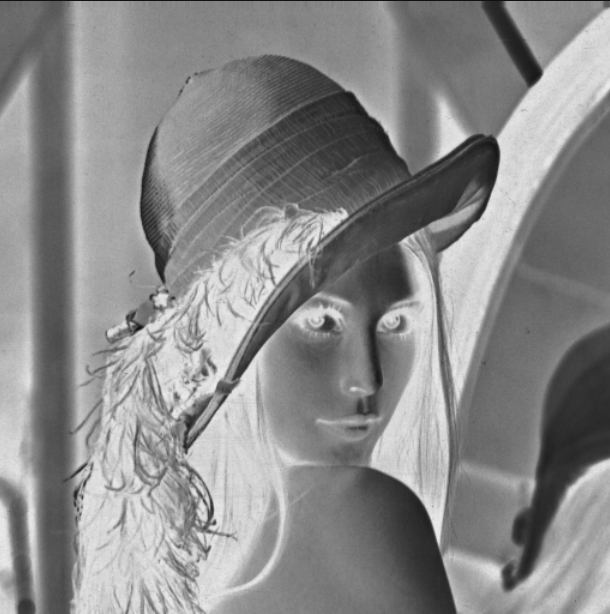
- Inverse (negative image)
- Normalize Dynamic Range
- Apply Look-Up Table (LUT) Transformation
- Set Levels (quantization)
- Resample (nearest & bilinear) — resize image smaller or larger
- Arithmetic Operations — difference, product, mixture of images
5. C Implementation
This section describes the internal organization of the project and how the image processing features are implemented in C using a modular design.
📂 Project Structure
| File | Description |
|---|---|
| pictures.h / pictures.c | Defines and implements core image operations such as reading, writing, creating, copying, converting, and cleaning images. |
| pixels.h / pixels.c | Manages pixel-level operations and defines symbolic color constants (RED, GREEN, BLUE) for RGB components. |
| lut.h / lut.c | Defines the Look-Up Table (LUT) structure and functions to create, clean, and apply LUTs for pixel transformations. |
| filename.h / filename.c | Provides functions to manipulate file paths and automatically generate output filenames based on operations. |
| main.c | The main entry point that demonstrates all implemented functionalities (conversion, brightness, inversion, resampling, etc.). Each operation is isolated and can be activated by uncommenting its corresponding code block. |
| Makefile | Automates compilation and linking of all source files into a single executable. |
Image Module (pictures.h / pictures.c)
This module defines the core Image data structure and implements fundamental image operations, including reading and writing images, grayscale and color conversion, normalization, inversion, resampling, and memory management.
pictures.h
#ifndef PICTURES_H
#define PICTURES_H

//For unit8_t
#include <stdint.h>

typedef unsigned char byte;
#define MAX_BYTE 255

// Picture structure
typedef struct pictures picture;
struct pictures{
    unsigned int height;
    unsigned int width;
    unsigned int channels; //1 for grayscale and 3 for color
    byte *data;  //Pointer to picture data
};

/*
@requires: nothing
@assigns : nothing
@ensures : Read a PGM OR PPM file and returns a picture
*/
picture read_picture(char *filename);

/*
@requires: nothing
@assigns : nothing
@ensures : Write a picture into a PGM or PPM file
*/
int write_picture(picture p, char *filename);

/*
@requires: width>0, height>0, channels > 0
@assigns : Dynamic allocation for data of picture or image(p.data)
@ensures : Return a initialise picture with the demension and channels specifics
*/
picture create_picture(unsigned int height,  unsigned int width, unsigned int channels);

/*
@requires: p != NULL
@assigns : Free memory associated with p->data, modify p fields (width, height, channels, data)
@ensures : Image data is freed, and width, height, channels fields are reset to 0, data is NULL
*/
void clean_picture(picture *p);

/*
@requires: p is a valid (non-empty) image.
@assigns : Allocates memory for the copied image data.
@ensures : Returns a copy of the image with the same dimensions, channels and data
           If the source image is empty, returns an empty image.
*/
picture copy_picture(picture p);

/*
@requires: nothing
@assigns : nothing
@ensures : Returns a non-zero value if the image is empty (NULL data or 0 dimensions/channels), 0 otherwise.
*/
int is_empty_picture(picture p);

/*
@requires: nothing
@assigns : nothing
@ensures : Returns a non-zero value if the image has a single channel(grayscale), 0 otherwise.
*/
int is_gray_picture(picture p);

/*
@requires: nothing
@assigns : nothing
@ensures : Returns a non-zero value if the image has a 3 channel(color), 0 otherwise.
*/
int is_color_picture(picture p);

/*
@requires: nothing
@assigns : nothing
@ensures : Display the info of picture(width, heigth, channels)
*/
void info_picture(picture p);

/*
@requires: p is valid picture
@assigns : Memory allocation for data of convert picture
@ensures : If the image is already in color, returns a copy. Otherwise, returns a color image by repeating the grayscale in each channel.
           Returns an empty image if allocation fails.
*/
picture convert_to_color_picture(picture p);

/*
@requires: p is valid picture
@assigns : Memory allocation for data of convert picture
@ensures : If the image is already grayscale, returns a copy. Otherwise, returns a converted grayscale image.
         Returns an empty image if allocation fails.
*/
picture convert_to_gray_picture(picture p);

/*
@requires: p is valid picture color
@assigns : Allocates memory for an array of 3 grayscale images (if the image is color) or one image (if it is grayscale).
@ensures : If the image is color, returns an array of 3 grayscale images corresponding to the R, G and B channels.
         If the image is grayscale, returns an array containing a copy of the image.
         Returns NULL on failure.
*/
picture *split_picture(picture p);

/*
@requires: The three images red, green and blue must have the same dimensions and be in grayscale.
@assigns : Allocates memory for the resulting color image data.
@ensures : Returns a color image composed of the three input images. Returns an empty image on failure.
*/
picture merge_picture(picture red, picture green, picture blue);

/*
@requires: p.data != NULL, factor > 0
@assigns : Allocates memory for the resulting image
@ensures : Returns a new image with brightness increased by the factor
*/
picture brighten_picture(picture p, double factor);

/*
@requires: p.data != NULL, number > 0
@assigns : Modifies pixel values in the image
@ensures : Returns a new image with melted pixel values based on the number of iterations
*/
picture melt_picture(picture p, int number);

/*
@requires: p is valid
@assigns : allocates a new LUT and modifies the image
@ensures : return the inverted image
*/
picture inverse_picture(picture p);

/*
@requires: p is valid
@assigns : modifies the image
@ensures : the pixel of p are spread between 0 and 255
*/
picture normalize_dynamic_picture(picture p);

/*
@requires: valid picture p and nb_levels > 1
@assigns : allocates and applies a new LUT to modify the image
@ensures : the pixel values are grouped into nb_levels distinct ranges
*/
picture set_levels_picture(picture p, byte nb_levels);

/*
@requires: p1 and p2 must have the same dimensions (width, height, channels)
@assigns : allocates memory for a new picture containing the difference
@ensures : returns an image with the absolute pixel-wise difference of p1 and p2
*/
picture diff_picture(picture p1, picture p2);

/*
@requires: p1 and p2 must have the same dimensions (width, height, channels)
@assigns : allocates memory for a new picture containing the difference
@ensures : returns an image with the product pixel-wise difference of p1 and p2
*/
picture mult_picture(picture p1, picture p2);

/*
@requires: p1 and p2 and p3 must have the same dimensions (width, height, channels)
@assigns : allocates memory for a new picture(mixed)
@ensures : return a new picture by using algorithm of mixture method
*/
picture mix_picture(picture p1, picture p2, picture p3);

/*
@requires: give a factor value
@assigns : allocates memory for a result picture
@ensures : Resizes the input picture using nearest neighbor interpolation and returns the resized picture.
*/
picture resample_picture_nearest(picture image, unsigned int new_width, unsigned int new_height);

/*
@requires: give a factor value
@assigns : allocates memory for a result picture
@ensures : Resizes the input picture using bilinear interpolation and returns the resized picture.
*/
picture resample_picture_bilinear(picture image, unsigned int new_width, unsigned int new_height);

/*
@requires: nothing
@assigns : allocates memory for a result picture
@ensures : return the resize image by using nearest neighbor intepolation between mask image and input image
*/
picture resize_mask(picture mask, unsigned int width, unsigned int height);

/*
@requires: img and mask must have the same dimensions
@assigns : nothing
@ensures : return the result image of product between img and mask after using resize_mask fonction
*/
picture image_mask_product(picture img,picture mask);

/*
@requires: input and original image must have the same dimensions
@assigns : nothing
@ensures : return the result image of mixture between inverted and mask after using resize_mask fonction
*/
picture image_mask_mixture(picture invert, picture original, picture resized_mask);

#endif //PICTURES_H
pictures.c
#include <stdio.h>
#include <stdlib.h>
#include <string.h>
#include <time.h>
#include <math.h>
#include "pictures.h"
#include "pixels.h"
#include "lut.h"


/*
@requires : nothing
@assigns  : nothing
@ensures  : Error handling
*/
static void error(const char *message) {
    fprintf(stderr, "%s\n", message);
    exit(EXIT_FAILURE);
}


// Read picture from PGM or PPM file
picture read_picture(char *filename){
    FILE *f = fopen(filename, "rb");
    if(!f) error("Error opening file");

    char buffer[128];
    unsigned int width;
    unsigned int height;
    byte *btm = NULL;

    //Read magic number
    fgets(buffer, 128, f);
    //PGM file(P5)
    if(strcmp(buffer,"P5\n") == 0){
        picture p = {0, 0, 1, NULL};
        fgets(buffer, 128, f);
        sscanf(buffer,"%d %d", &width,&height);
        fgets(buffer,128,f);

        //Allocate memory for grayscale pixels
        btm = malloc(height * width * sizeof(byte));
        if(!btm) error("Memory allocation failed");
        fread(btm, sizeof(byte), height*width, f);
        p.width = width;
        p.height = height;
        p.data = btm;
        fclose(f);
        return p;
    }
    //PPM file (P6)
    else if(strcmp(buffer, "P6\n") == 0){
        picture p = {0, 0, 3, NULL};
        fgets(buffer,128,f);
        sscanf(buffer,"%d %d", &height, &width);
        fgets(buffer,128,f);
        btm = malloc(width * height * 3 * sizeof(byte));
        if (!btm) error("Memory allocation failed");
        fread(btm, sizeof(byte), height*width*3, f);
        p.width = width;
        p.height = height;
        p.data = btm;

        fclose(f);
        return p;
    }
    else{
        fclose(f);
        error("Unsupported file format");
    }
    return (picture) {0};

}


// Write picture to new file
int write_picture(picture p,char *filename) {
    FILE *f = fopen(filename, "wb");
    if (!f) {
        fprintf(stderr, "Error opening file for writing: %s\n", filename);
        return 1;
    }

    // Write header
    // PGM file (Grayscale image)
    if(p.channels == 1) {
        fprintf(f, "P5\n%d %d\n255\n", p.width, p.height);
        fwrite(p.data, sizeof(byte), p.width * p.height, f);
    }
    // PPM file (Color image)
    else if(p.channels == 3) {
        fprintf(f, "P6\n%d %d\n255\n", p.width, p.height);
        fwrite(p.data, sizeof(byte), p.width * p.height * 3, f);
    }
    else{
        fclose(f);
        fprintf(stderr, "Unsupported image format\n");
        return 1;
    }

    fclose(f);
    return 0;  // Return success code
}


//Create picture
picture create_picture(unsigned int height,  unsigned int width, unsigned int channels){
    picture p;
    p.width = width;
    p.height = height;
    p.channels = channels;
    p.data = malloc(height * width *channels * sizeof(byte));
    if(!p.data){
        fprintf(stderr, "Error memory allocation.\n");
        picture empty = {0, 0, 0, NULL};
        return empty;
    }

    return p;
}


//Clean picture
void clean_picture(picture *p){
    if (p && p->data) {
        free(p->data);
        p->data = NULL;
        p->width = 0;
        p->height = 0;
        p->channels = 0;
    }
}


//Copy picture
picture copy_picture(picture p){
    if (is_empty_picture(p)){
        picture empty = {0, 0, 0, NULL};
        return empty;
    }

    picture copy = create_picture(p.height, p.width, p.channels);
    if (copy.data) {
        for (size_t i = 0; i < p.width * p.height * p.channels; i++) {
            copy.data[i] = p.data[i];
        }

    }
    return copy;
}


//Empty picture
int is_empty_picture(picture p) {
    return p.data == NULL || p.width == 0 || p.height == 0 || p.channels == 0;
}


//Is_grayscale picture
int is_gray_picture(picture p){
    return (p.channels == 1);
}


//Is_color picture
int is_color_picture(picture p){
    return (p.channels == 3);
}


//Display info of picture
void info_picture(picture p) {
    printf("(%d x %d x %d)\n", p.width, p.height, p.channels);
}


//Convert from gray picture to color picture
picture convert_to_color_picture(picture p){
    if (is_empty_picture(p)) {
        fprintf(stderr, "Error: Cannot convert an empty image to color.\n");
        picture empty = {0, 0, 0, NULL};
        return empty;
    }

    if(is_color_picture(p)){
        return copy_picture(p);
    }

    picture color = create_picture(p.height, p.width, 3);
    if(color.data){
        for(unsigned int i=0; i< p.height*p.width; i++){
            color.data[i * 3] = p.data[i];     //R
            color.data[i * 3 + 1] = p.data[i]; //G
            color.data[i * 3 + 2] = p.data[i]; //B
        }
    }
    return color;
}


//Convert from color to grayscale
picture convert_to_gray_picture(picture p){
    if (is_empty_picture(p)) {
        fprintf(stderr, "Error: Cannot convert an empty image to grayscale.\n");
        picture empty = {0, 0, 0, NULL};
        return empty;
    }

    if(is_gray_picture(p)){
        return copy_picture(p);
    }

    picture gray = create_picture(p.height, p.width, 1);
    if(gray.data){
        for(unsigned int i=0; i<p.height*p.width; i++){
            byte R = p.data[i * 3];
            byte G = p.data[i * 3 + 1];
            byte B = p.data[i * 3 + 2];
            gray.data[i] = (byte)(0.299 * R + 0.587 * G + 0.114 * B);
        }
    }
    return gray;
}


//Split a color image into its RGB components
picture *split_picture(picture p){
    if(is_gray_picture(p)){
        picture *single_channel = malloc(sizeof(picture));
        *single_channel = copy_picture(p);
        return single_channel;
    }
    if(!is_color_picture(p)) return NULL;

    picture *channels = malloc(3 * sizeof(picture));
    if(!channels) return NULL;

    for(int i=0; i< 3; i++){
        channels[i] = create_picture(p.height,p.width,1);
        if(channels[i].data){
            for(unsigned j=0; j<p.height*p.width; j++){
                channels[i].data[j] = p.data[j * 3 + i];
            }
        }
    }

    return channels;

}


//Merge picture
picture merge_picture(picture red, picture green, picture blue){
    if(red.height != green.height || red.height != blue.height ||
        red.width != green.width || red.width != blue.width ||
        !is_gray_picture(red) || !is_gray_picture(green) || !is_gray_picture(blue)) {
        picture p = {0,0,0,NULL};
        return p;
    }

    picture color = create_picture(red.height, red.width, 3);
    if(color.data){
        for(unsigned int i=0; i < red.height * red.width; i++){
            color.data[i * 3] = red.data[i];
            color.data[i * 3 + 1] = green.data[i];
            color.data[i * 3 + 2] = blue.data[i];
        }
    }
    return color;

}


//Brighten picture with factor 1.5
picture brighten_picture(picture p, double factor){
    if (!p.data || factor <= 0) {
        fprintf(stderr, "Invalid input for brightening\n");
        picture empty = {0, 0, 0, NULL};
        return empty;
    }

    picture brightened = create_picture(p.height, p.width, p.channels);
    if (!brightened.data) {
        fprintf(stderr, "Failed to allocate memory for brightened image\n");
        picture empty = {0, 0, 0, NULL};
        return empty;
    }

    for (unsigned int i = 0; i < p.width * p.height * p.channels; i++) {
        int value = (int)(p.data[i] * factor);
        if (value > MAX_BYTE) {
            brightened.data[i] = MAX_BYTE;
        } else {
            brightened.data[i] = (byte)value;
        }
    }
    return brightened;

}


// Melted image pixels based on the number of iterations
picture melt_picture(picture p, int number){
    if (!p.data || number <= 0) {
        fprintf(stderr, "Invalid input for melting\n");
        picture empty = {0, 0, 0, NULL};
        return empty;
    }
    picture melted = copy_picture(p);
    if (!melted.data) {
        fprintf(stderr, "Failed to allocate memory for melted image\n");
        picture empty = {0, 0, 0, NULL};
        return empty;
    }

    srand((unsigned int)time(NULL));
    for (int n = 0; n < number; ++n) {
        unsigned int i = rand() % p.width;
        unsigned int j = rand() % (p.height - 1) + 1;

        for (unsigned int c = 0; c < p.channels; ++c) {
            byte *current_pixel = &melted.data[(j * p.width + i) * p.channels + c];
            byte *above_pixel = &melted.data[((j - 1) * p.width + i) * p.channels + c];

            // Apply the melting logic
            if (*above_pixel < *current_pixel) {
                *current_pixel = *above_pixel;
            }
        }
    }

    return melted;
}


//Invert an image using a LUT
picture inverse_picture(picture p) {
    lut l = create_lut(256);
    for (int i = 0; i < 256; i++) {
        l.values[i] = 255 - i;
    }
    picture inverted = apply_lut(p, l);
    clean_lut(&l);
    return inverted;
}


//// Normalize the dynamic range of an image
picture normalize_dynamic_picture(picture p) {
    byte min_val = 255;
    byte max_val = 0;

    // Find min and max values
    for (unsigned int i = 0; i < p.height * p.width * p.channels; i++) {
        if (p.data[i] < min_val) min_val = p.data[i];
        if (p.data[i] > max_val) max_val = p.data[i];
    }

    if (min_val == max_val) {
        fprintf(stderr, "Cannot normalize an image with uniform pixel values\n");
        return copy_picture(p);
    }

    lut l = create_lut(256);
    for (int i = 0; i < 256; i++) {
        l.values[i] = (byte)(((i - min_val) * 255) / (max_val - min_val));
    }
    picture normalized = apply_lut(p, l);
    clean_lut(&l);
    return normalized;
}


//Set levels in an image
picture set_levels_picture(picture p, byte nb_levels){
    if (nb_levels < 2) {
        fprintf(stderr, "Number of levels must be at least 2\n");
        picture empty = {0, 0, 0, NULL};
        return empty;
    }

    lut l = create_lut(nb_levels);
    double step = 256.0 / nb_levels;
    for (unsigned int i = 0; i < nb_levels; i++) {
        // Map each level to its corresponding value in the range [0, 255]
        l.values[i] = (unsigned char)(i * step);
    }

    picture result = create_picture(p.height, p.width, p.channels);

     // Process each pixel
    for (unsigned int y = 0; y < p.height; y++) {
        for (unsigned int x = 0; x < p.width; x++) {
            // Process each color channel
            byte red_value = read_pixel_channel(&p, y, x, RED);
            byte green_value = read_pixel_channel(&p, y, x, GREEN);
            byte blue_value = read_pixel_channel(&p, y, x, BLUE);

            // Map each channel value to the appropriate level
            unsigned int red_level = (red_value * (nb_levels - 1)) / 255;
            unsigned int green_level = (green_value * (nb_levels - 1)) / 255;
            unsigned int blue_level = (blue_value * (nb_levels - 1)) / 255;

            // Write the new pixel values using the LUT
            write_pixel_channel(&result, y, x, RED, l.values[red_level]);
            write_pixel_channel(&result, y, x, GREEN, l.values[green_level]);
            write_pixel_channel(&result, y, x, BLUE, l.values[blue_level]);
        }
    }

    //picture leveled = apply_lut(p, l);
    clean_lut(&l);
    return result;
}


//Compute the difference between two images(absolute value)
picture diff_picture(picture p1, picture p2){
    if (p1.height != p2.height || p1.width != p2.width || p1.channels != p2.channels) {
        fprintf(stderr, "Error: Images must have the same dimensions.\n");
        picture empty = {0, 0, 0, NULL};
        return empty;
    }

    // Create a new image for the result
    picture result = create_picture(p1.height, p1.width, p1.channels);
    if (!result.data) {
        fprintf(stderr, "Failed to allocate memory for the difference image.\n");
        picture empty = {0, 0, 0, NULL};
        return empty;
    }

    // Compute the absolute difference
    for (unsigned int i = 0; i < p1.height * p1.width * p1.channels; i++) {
        result.data[i] = (byte)abs(p1.data[i] - p2.data[i]);
    }

    return result;
}


//Multiply two images
picture mult_picture(picture p1, picture p2){
    if (p1.height != p2.height || p1.width != p2.width || p1.channels != p2.channels) {
        fprintf(stderr, "Error: Images must have the same dimensions.\n");
        picture empty = {0, 0, 0, NULL};
        return empty;
    }

    // Create a new image for the result
    picture result = create_picture(p1.height, p1.width, p1.channels);
    if (!result.data) {
        fprintf(stderr, "Failed to allocate memory for the product image.\n");
        picture empty = {0, 0, 0, NULL};
        return empty;
    }
    for (unsigned int i = 0; i < p1.height * p1.width * p1.channels; i++) {
        unsigned int product = p1.data[i] * p2.data[i];
        if (product > MAX_BYTE) {
            result.data[i] = MAX_BYTE;
        }
        else {
            result.data[i] = (byte)product;
        }
    }
    return result;
}


// Mixture images
picture mix_picture(picture p1, picture p2, picture p3) {
    if (p1.width != p2.width || p1.height != p2.height || p1.channels != p2.channels ||
        p1.width != p3.width || p1.height != p3.height || p1.channels != p3.channels) {
        fprintf(stderr, "Error: Images must have the same dimensions and channels for mixing operation.\n");
        picture empty = {0, 0, 0, NULL};
        return empty;
    }

    picture mixed = create_picture(p1.width, p1.height, p1.channels);

    for (unsigned int i = 0; i < p1.width * p1.height * p1.channels; ++i) {
        float alpha = p3.data[i] / 255.0f; // Normalize p3 values to [0, 1]
        mixed.data[i] = (byte)((1.0f - alpha) * p1.data[i] + alpha * p2.data[i]);
    }

    return mixed;
}


// Resample image using nearest neighbor interpolation
picture resample_picture_nearest(picture image, unsigned int new_width, unsigned int new_height) {
    // Allocate memory for the new image
    picture result;
    result.width = new_width;
    result.height = new_height;
    result.channels = image.channels;
    result.data = (byte*)malloc(new_width * new_height * image.channels);

    if (result.data == NULL) {
        fprintf(stderr, "Error: Unable to allocate memory for resized image.\n");
        exit(1);
    }

    // Calculate scale factors
    float x_scale_factor = (float)image.width / new_width; // Scale factor for width
    float y_scale_factor = (float)image.height / new_height; // Scale factor for height

    // Perform nearest neighbor interpolation
    for (unsigned int y = 0; y < new_height; y++) {
        for (unsigned int x = 0; x < new_width; x++) {
            // 1. Compute the nearest source pixel coordinates
            unsigned int src_x = (unsigned int)(x * x_scale_factor);
            unsigned int src_y = (unsigned int)(y * y_scale_factor);

            // Ensure source coordinates do not exceed bounds
            if (src_x >= image.width) src_x = image.width - 1;
            if (src_y >= image.height) src_y = image.height - 1;

            // 2. Copy pixel data from the source image to the destination image
            for (unsigned int c = 0; c < image.channels; c++) {
                result.data[(y * new_width + x) * image.channels + c] =
                    image.data[(src_y * image.width + src_x) * image.channels + c];
            }
        }
    }

    return result;
}


// Resample image using bilinear interpolation
picture resample_picture_bilinear(picture image, unsigned int new_width, unsigned int new_height) {
    // Allocate memory for the new image
    picture result;
    result.width = new_width;
    result.height = new_height;
    result.channels = image.channels;
    result.data = (byte*)malloc(new_width * new_height * image.channels);

    if (result.data == NULL) {
        fprintf(stderr, "Error: Unable to allocate memory for resized image.\n");
        exit(1);
    }

    // Calculate scale factors
    float x_scale_factor = (float)image.width / new_width;
    float y_scale_factor = (float)image.height / new_height;

    // Perform bilinear interpolation
    for (unsigned int y = 0; y < new_height; y++) {
        for (unsigned int x = 0; x < new_width; x++) {
            // Calculate source coordinates
            float src_x = x * x_scale_factor;
            float src_y = y * y_scale_factor;

            // Find surrounding pixels
            unsigned int x1 = (unsigned int)src_x;
            unsigned int y1 = (unsigned int)src_y;
            unsigned int x2 = x1 + 1;
            if (x2 >= image.width) x2 = x1;
            unsigned int y2 = y1 + 1;
            if (y2 >= image.height) y2 = y1;

            // Calculate interpolation coefficients
            float alpha = src_x - x1;
            float beta = src_y - y1;

            // Interpolate pixel value for each channel
            for (unsigned int c = 0; c < image.channels; c++) {
                float p1 = image.data[(y1 * image.width + x1) * image.channels + c];
                float p2 = image.data[(y1 * image.width + x2) * image.channels + c];
                float p3 = image.data[(y2 * image.width + x1) * image.channels + c];
                float p4 = image.data[(y2 * image.width + x2) * image.channels + c];

                result.data[(y * new_width + x) * image.channels + c] = (byte)(
                    ((1.0f - alpha) * (1.0f - beta) * p1) +
                    (alpha * (1.0f - beta) * p2) +
                    ((1.0f - alpha) * beta * p3) +
                    (alpha * beta * p4)
                );
            }
        }
    }

    return result;
}


// Resize the mask to match the size of the input image
picture resize_mask(picture mask, unsigned int width, unsigned int height) {
    return resample_picture_nearest(mask, width, height); // Use nearest neighbor for mask resizing
}


//Calculer the pixel product of an image and a mask
picture image_mask_product(picture img, picture mask){
    if (img.width != mask.width || img.height != mask.height || img.channels != mask.channels) {
        fprintf(stderr, "Error: Image and mask have difference dimensions.\n");
        picture empty = {0, 0, 0, NULL};
        return empty;
    }
    picture product = create_picture(img.height, img.width, img.channels);
    for(unsigned int i=0; i < img.width * img.height * img.channels; i++){
        unsigned int scale_value = (img.data[i] * mask.data[i]) / 255;
        product.data[i] = (byte)scale_value;
    }

    return product;
}


//Mix original and inverted images using mask
picture image_mask_mixture(picture invert, picture original, picture resized_mask){
    if(resized_mask.height != original.height || resized_mask.width != original.width || resized_mask.channels != original.channels){
        fprintf(stderr, "Error: Original and mask image have the difference dimensions.\n");
        picture empty = {0, 0, 0, NULL};
        return empty;
    }

    picture mixture = create_picture(original.height, original.width, original.channels);
    for(unsigned int i = 0; i < original.width * original.height * original.channels; i++){
        float alpha = resized_mask.data[i] / 255.0f; // Normalize mask value to [0, 1]
        mixture.data[i] = (byte)((1 - alpha) * invert.data[i] + alpha * original.data[i]);
    }

    return mixture;
}
Pixel Module (pixels.h / pixels.c)
This module handles low-level pixel operations and provides symbolic constants (RED, GREEN, BLUE) for accessing and manipulating RGB image channels.
pixels.h
#ifndef PIXELS_H
#define PIXELS_H

#include "pictures.h"

// Define symbolic constants for color channels
typedef enum {
    RED = 0,
    GREEN = 1,
    BLUE = 2
} ColorChannel;

/*
@requires: p is valid picture
@assigns : nothing
@ensures : return the value of a specific component(channel) of a pixel
*/
byte read_pixel_channel(picture *p, unsigned int row, unsigned int col, ColorChannel channel);

/*
@requires: p is valid picture
@assigns : nothing
@ensures : Write a value to a specific component(channel) of a pixel
*/
void write_pixel_channel(picture *p, unsigned int row, unsigned int col, ColorChannel channel, byte value);

#endif // PIXELS_H
pixels.c
#include <stdio.h>
#include "pictures.h"
#include "pixels.h"


// Read the value of a specific component(channel) of a pixel
byte read_pixel_channel(picture *p, unsigned int row, unsigned int col, ColorChannel channel) {
    if (!p->data || row >= p->height || col >= p->width || channel >= p->channels) {
        fprintf(stderr, "Error: Invalid pixel access.\n");
        return 0;
    }
    return p->data[((row * p->width + col) * p->channels) + channel];
}


// Write a value to a specific component(channel) of a pixel
void write_pixel_channel(picture *p, unsigned int row, unsigned int col, ColorChannel channel, byte value) {
    if (!p->data || row >= p->height || col >= p->width || channel >= p->channels) {
        fprintf(stderr, "Error: Invalid pixel access.\n");
        return;
    }
    p->data[((row * p->width + col) * p->channels) + channel] = value;
}
Look-Up Table Module (lut.h / lut.c)
This module implements Look-Up Table (LUT) functionality, enabling efficient pixel-wise transformations such as intensity mapping and dynamic range normalization.
lut.h
#ifndef LUT_H
#define LUT_H
#include "pictures.h"

//LUT structure
typedef struct {
    int size; // Number of values in the LUT
    byte *values; // Array of LUT values
} lut;

/*
@requires size > 0
@assigns nothing
@ensures result != NULL
*/
lut create_lut(int size);

/*
@requires l != null
@assigns l->values, l
@ensures l = NULL
*/
void clean_lut(lut *l);

/*
@requires l.size == 256 and valid image p
@assigns modifies image pixels in p
@ensures the pixel values in p are updated based on the LUT
*/
picture apply_lut(picture p, lut l);

#endif //LUT_H
lut.c
#include <stdlib.h>
#include <stdio.h>
#include <math.h>
#include "pictures.h"
#include "lut.h"

// Create a LUT
lut create_lut(int size) {
    lut l;
    l.size = size;
    l.values = malloc(size * sizeof(byte));

    if (!l.values) {
        fprintf(stderr, "Failed to allocate memory for LUT.\n");
        l.size = 0;
    }
    return l;
}


//Clean lut
void clean_lut(lut *l) {
    if (l->values) {
        free(l->values);
        l->values = NULL;
    }
    l->size = 0;
}


// Apply a LUT to an image
picture apply_lut(picture p, lut l) {
    if (!p.data || l.size <= 0 || !l.values) {
        fprintf(stderr, "Invalid input for apply_lut.\n");
        picture empty = {0, 0, 0, NULL};
        return empty;
    }

    picture modified = create_picture(p.height, p.width, p.channels);
    if(!modified.data) {
        fprintf(stderr, "Failed to allocate memory for modified image.\n");
        picture empty = {0, 0, 0, NULL};
        return empty;
    }

    for(unsigned int i = 0; i < p.height * p.width * p.channels; i++){
        // Map pixel value to the LUT range and apply LUT
        modified.data[i] = l.values[p.data[i]];
    }

    return modified;
}
Filename Utility Module (filename.h / filename.c)
This module provides helper functions to manipulate file paths and automatically generate output filenames based on the applied image processing operations.
filename.h
/*
 * filename.h
 * Contient des fonctions pour décomposer un nom de fichier
 * <dirname>/<name>.<ext> en:
 *  - dirname = chemin avant le nom du fichier
 *  - name = nom du fichier : <dirname>/<name>.<ext>
 *  - ext = l'extension du fichier
 */

#ifndef __FILENAME__
#define __FILENAME__

#ifdef _WIN32
    #define PATH_SEP '\\'
#else
    #define PATH_SEP '/'
#endif

/**
 * Extraction du chemin avant le nom depuis le path d'un fichier
 * @param [in] path le chemin complet du fichier
 * @return le répertoire du fichier
 */
char * dir_from_path(char * path);

/**
 * Extraction du nom depuis le path d'un fichier
 * @param [in] path le chemin complet du fichier
 * @return le nom du fichier sans l'extension
 */
char * name_from_path(char * path);

/**
 * Extraction de l'extension du fichier depuis le path d'un fichier
 * @param [in] path le chemin complet du fichier
 * @return l'extension du fichier ou bien NULL si path ne contient aucune
 * extension
 */
char * ext_from_path(char * path);

/**
 * Concaténation des diverses parties d'un chemin pour composer un nouveau
 * chemin: <dir><name>_<op>.<ext>
 * @param [in] dir la partie répertoire du chemin
 * @param [in] name la partie nom du chemin
 * @param [in] op la partie opération du chemin
 * @param [in] ext la partie extension du chemin
 * @return une nouvelle chaîne dynamiquement allouée contenant le chemin
 * composé des différentes parties
 */
char * concat_parts(char * dir, char * name, char * op, char * ext);

#endif  // __FILENAME__
filename.c
#include "filename.h"
#include <libgen.h> // for pattern matching
#include <stdlib.h> // for alloc funcs
#include <string.h>	// for strlen

/*
 * Extraction du chemin avant le nom depuis le path d'un fichier
 * @param [in] path le chemin complet du fichier
 * @return le répertoire du fichier
 */
char * dir_from_path(char * path)
{
	return dirname(strdup(path));
}

/**
 * Extrait une sous chaîne d'une chaîne
 * @param [in] string la chaîne dont on veut extraire une sous chaîne
 * @param [in] start l'index du début de l'extraction (start inclus)
 * @param [in] end l'index au delà de la fin de l'extraction (end exclus)
 * @return une sous-chaîne dynamiquement allouée contenant end - start + 1
 * caractères (avec le `\0` à la fin)
 */
char * substr(char * string, size_t start, size_t end)
{
	size_t len = strlen(string);
	if (start >= end || start > len || end > len)
	{
		return NULL;
	}
	char * result = calloc(end - start + 1, sizeof(char));
	for (size_t i = start, j = 0; i < end; i++, j++)
	{
		result[j] = string[i];
	}

	return result;
}

/**
 * Index de la dernière occurrence du caractère c dans la chaîne s
 * @param [in] s la chaîne s à explorer
 * @param [in] c le caractère à rechercher
 * @return l'index de la dernière occurrence du caractère c dans la chaîne s
 * ou bien -1 si aucune occurrence n'a été trouvée
 */
int last_index_of(char * s, char c)
{
	int index = -1;
	size_t i = 0;

	while (s[i] != '\0')
	{
		if (s[i] == c)
		{
			index = (int) i;
		}
		i++;
	}

	return index;
}

/*
 * Extraction du nom depuis le path d'un fichier
 * @param [in] path le chemin complet du fichier
 * @return le nom du fichier sans l'extension
 */
char * name_from_path(char * path)
{
	char * file_name = basename(path);
	int dot_index = last_index_of(file_name, '.');
	if (dot_index == -1)
	{
		return file_name;
	}
	return substr(file_name, 0, dot_index);
}

/*
 * Extraction de l'extension du fichier depuis le path d'un fichier
 * @param [in] path le chemin complet du fichier
 * @return l'extension du fichier ou bien NULL si path ne contient aucune
 * extension
 */
char * ext_from_path(char * path)
{
	char * file_name = basename(path);
	const size_t full_length = strlen(file_name);
	int dot_index = last_index_of(file_name, '.');
	if (dot_index == -1)
	{
		return NULL;
	}
	return substr(file_name, dot_index + 1, full_length);
}

/*
 * Concaténation des diverses parties d'un chemin pour composer un nouveau
 * chemin: <dir><name>_<op>.<ext>
 * @param [in] dir la partie répertoire du chemin
 * @param [in] name la partie nom du chemin
 * @param [in] op la partie opération du chemin
 * @param [in] ext la partie extension du chemin
 * @return une nouvelle chaîne dynamiquement allouée contenant le chemin
 * composé des différentes parties
 */
char * concat_parts(char * dir, char * name, char * op, char * ext)
{
	size_t total_length = strlen(dir);
    total_length += strlen(name);
    total_length += strlen(op);
    total_length += strlen(ext);
    total_length += 4; // for '/' + '_' + '.' + trailing '\0'
	char * result = (char *) calloc(total_length, sizeof(char));
	const char z = '\0';
	size_t i = 0;
	while (*dir != z)
	{
		result[i++] = *dir;
		dir++;
	}
    result[i++] = PATH_SEP;
	while (*name != z)
	{
		result[i++] = *name;
		name++;
	}
	result[i++] = '_';
	while (*op != z)
	{
		result[i++] = *op;
		op++;
	}
	result[i++] = '.';
	while (*ext != z)
	{
		result[i++] = *ext;
		ext++;
	}
	return result;
}
Main Program (main.c)
This file serves as the entry point of the application. It demonstrates all implemented image processing features.
main.c
#include <stdio.h>
#include <stdlib.h>
#include <string.h>
#include <math.h>
#include "pictures.h"
#include "filename.h"
#include "pixels.h"

int main(int argc, char *argv[]){

    //Iteration for input filename into argv[i] while execute by comment line
    for(int i=1; i<argc; i++){
        if(argc < 2){
        fprintf(stderr, "usage: %s <input_filename1> <input_filename2>\n", argv[0]);
        exit(1);
        }
    }

    //Implement filename to create the output_name of read file
    char* dir = dir_from_path(argv[1]);
    char* name = name_from_path(argv[1]);
    char* ext = ext_from_path(argv[1]);


    // **1. Read and Write fonction**
    picture p = read_picture(argv[1]);
    printf("File read successful!\n");
    write_picture(p, concat_parts(dir,name,"out",ext));
    printf("Write: %s\n", concat_parts(dir,name,"out",ext));
    clean_picture(&p);


    **2. Convert fonction from Gray to color**
    picture p = read_picture(argv[1]);
    picture convert_gray = convert_to_color_picture(p);
    write_picture(convert_gray ,concat_parts(dir,name,"convert_color",ext));
    printf("Write: %s\n", concat_parts(dir,name,"convert_color",ext));
    clean_picture(&convert_gray);


     // **3. Convert fonction from Color to gray**
    picture p = read_picture(argv[1]);
    picture convert_color = convert_to_gray_picture(p);
    write_picture(convert_color ,concat_parts(dir,name,"convert_gray",ext));
    printf("Write: %s\n", concat_parts(dir,name,"convert_gray",ext));
    clean_picture(&convert_color);


    // **4. Convert color image into 3 components (red, green, blue)**
    picture p = read_picture(argv[1]);
    picture *channels = split_picture(p);
    write_picture(channels[RED] ,concat_parts(dir,name,"red",ext));
    printf("Write: %s\n", concat_parts(dir,name,"red",ext));
    write_picture(channels[GREEN] ,concat_parts(dir,name,"green",ext));
    printf("Write: %s\n", concat_parts(dir,name,"green",ext));
    write_picture(channels[BLUE] ,concat_parts(dir,name,"blue",ext));
    printf("Write: %s\n", concat_parts(dir,name,"blue",ext));
    for(int i=0; i<3; i++){
    clean_picture(&channels[i]);
    }


    // **5. Brighten picture with factor 1.5**
    picture p = read_picture(argv[1]);
    picture brightened = brighten_picture(p, 1.5);
    write_picture(brightened ,concat_parts(dir,name,"brighten",ext));
    printf("Write: %s\n", concat_parts(dir,name,"brighten",ext));
    clean_picture(&brightened);


    // **6. Melt the image**
    picture p = read_picture(argv[1]);
    int number = p.width * p.height * p.channels * 5;
    picture melted = melt_picture(p, number);
    write_picture(melted, concat_parts(dir,name,"melted",ext));
    printf("Write: %s\n", concat_parts(dir,name,"melted",ext));
    clean_picture(&melted);


    // **7. Inverse the image**
    picture p = read_picture(argv[1]);
    picture inverted = inverse_picture(p);
    write_picture(inverted, concat_parts(dir,name,"inverse",ext));
    printf("Write: %s\n", concat_parts(dir,name,"inverse",ext));
    clean_picture(&inverted);


    // **8. Normalize dynamic grayscale**
    picture p = read_picture(argv[1]);
    picture normalized = normalize_dynamic_picture(p);
    write_picture(normalized, concat_parts(dir,name,"dynamic",ext));
    clean_picture(&normalized);


    // **9. Normalize dynamic to 3 components of color image**
    picture red = read_picture(argv[1]);
    picture green = read_picture(argv[2]);
    picture blue = read_picture(argv[3]);
    //apply normalize to all components
    picture p1 = normalize_dynamic_picture(red);
    picture p2= normalize_dynamic_picture(green);
    picture p3= normalize_dynamic_picture(blue);
    apply merge after normalize it
    picture merge = merge_picture(p1, p2, p3);
    write_picture(merge, concat_parts(dir,name,"dynamic",ext));
    clean_picture(&merge);


    // **10. Set level**
    picture p = read_picture(argv[1]);
    picture leveled = set_levels_picture(p,8);
    write_picture(leveled, concat_parts(dir,name,"levels",ext));
    printf("Set level success: %s\n", concat_parts(dir,name,"levels",ext));
    clean_picture(&leveled);


    // **11. Resample the image into smaller**
    float factor = 1.36;
    picture p = read_picture(argv[1]);
    unsigned int small_width = (unsigned int)(p.width / factor);
    unsigned int small_height = (unsigned int)(p.height / factor);
    //Smaller nearest
    picture smaller_nearest = resample_picture_nearest(p,small_width,small_height);
    write_picture(smaller_nearest, concat_parts(dir,name,"smaller_nearest",ext));
    printf("Write: %s\n", concat_parts(dir,name,"smaller_nearest",ext));
    clean_picture(&smaller_nearest);
    //Smaller bilinear
    picture smaller_bilinear = resample_picture_bilinear(p, small_width, small_height);
    write_picture(smaller_bilinear, concat_parts(dir,name,"smaller_bilinear",ext));
    printf("Write: %s\n", concat_parts(dir,name,"smaller_bilinear",ext));
    clean_picture(&smaller_bilinear);


    // **12. Resample the image into larger**
    float large_factor = 1.36;
    picture p = read_picture(argv[1]);
    unsigned int large_width = (unsigned int)(p.width * large_factor);
    unsigned int large_height = (unsigned int)(p.height * large_factor);
    //Larger nearest
    picture enlarged_nearest = resample_picture_nearest(p, large_width, large_height);
    write_picture(enlarged_nearest, concat_parts(dir,name,"larger_nearest",ext));
    printf("Write: %s\n", concat_parts(dir,name,"larger_nearest",ext));
    clean_picture(&enlarged_nearest);

    // **13. Larger bilinear **
    picture enlarged_bilinear = resample_picture_bilinear(p, large_width, large_height);
    write_picture(enlarged_bilinear, concat_parts(dir,name,"larger_bilinear",ext));
    printf("Write: %s\n", concat_parts(dir,name,"larger_bilinear",ext));
    clean_picture(&enlarged_bilinear);


    // **14. Difference between Lenna_[gray|color]_larger_nearest.p[g|p]m and Lenna_[gray|color]_larger_bilinear.p[g|p]m **
    picture p1 = read_picture(argv[1]);  // Input Lenna_[gray|color]_larger_nearest.p[g|p]m (which was created above)
    picture p2 = read_picture(argv[2]); // Input Lenna_[gray|color]_larger_bilinear.p[g|p]m (which was created above)
    picture diff = diff_picture(p1,p2);
    write_picture(diff, concat_parts(dir,name,"difference",ext));
    printf("Write: %s\n", concat_parts(dir,name,"difference",ext));
    clean_picture(&diff);


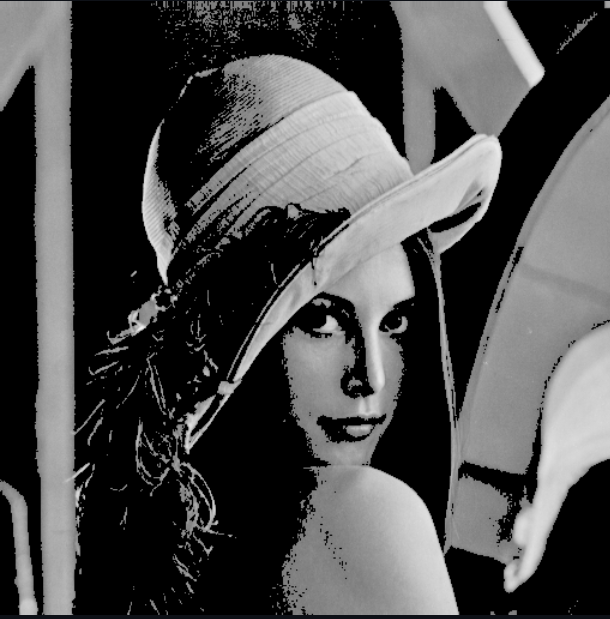
    // ** 15. Product of input image with mask**
    picture input = read_picture(argv[1]); //Input Lenna_gray.pgm
    picture mask = read_picture(argv[2]);  //Input Lenna_BW.pgm
    picture resized_mask = resize_mask(mask, input.width, input.height);
    picture product = image_mask_product(input, resized_mask);
    write_picture(product, concat_parts(dir,name,"product",ext));
    printf("Write: %s\n", concat_parts(dir,name,"product",ext));
    clean_picture(&product);

    //** 16. Mixture of the previously calculated inverted image and the input image using the mask
    picture input = read_picture(argv[1]);  //Input Lenna_color.ppm
    picture inverted = inverse_picture(input);
    picture mask = read_picture(argv[2]);   // Input Lenna_color.ppm
    picture resized_mask = resize_mask(mask, input.width, input.height);
    picture mixture = image_mask_mixture(inverted, mask, resized_mask);
    write_picture(mixture, concat_parts(dir,name,"mixture",ext));
    clean_picture(&mixture);

}
⚙️ Build System (Makefile)
The Makefile automates the compilation and linking process of all modules, allowing the project to be built easily and consistently.
Makefile
CC = gcc
CFLAGS = -g -Wall -Wextra
LFLAGS = -lm

#targets
all: prog

filename.o: filename.h
	$(CC) $(CFLAGS) -c filename.c

pictures.o: pictures.h
	$(CC) $(CFLAGS) -c pictures.c

pixels.o: pixels.h pictures.h
	$(CC) $(CFLAGS) -c pixels.c

lut.o: lut.h pictures.h
	$(CC) $(CFLAGS) -c lut.c

main.o: filename.h pictures.h pixels.h lut.h
	$(CC) $(CFLAGS) -c main.c

prog: filename.o pictures.o pixels.o lut.o main.o
	$(CC) $(CFLAGS) $^ -o $@ $(LFLAGS)

clean:
	rm -f *.o prog
6. Results
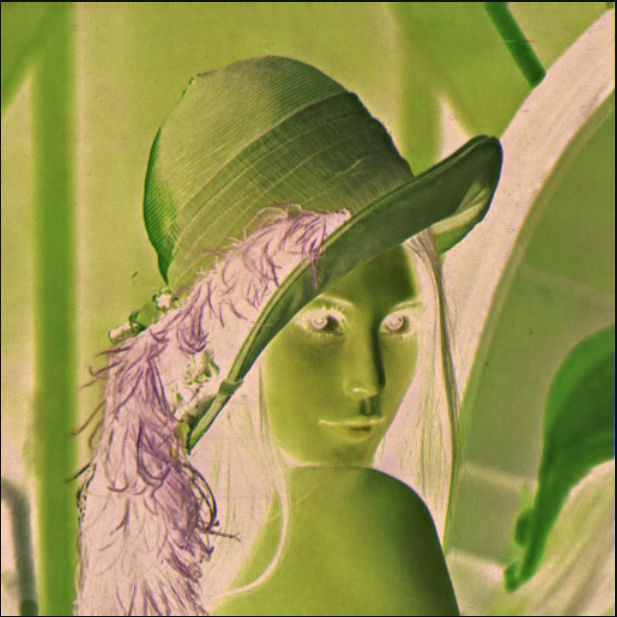
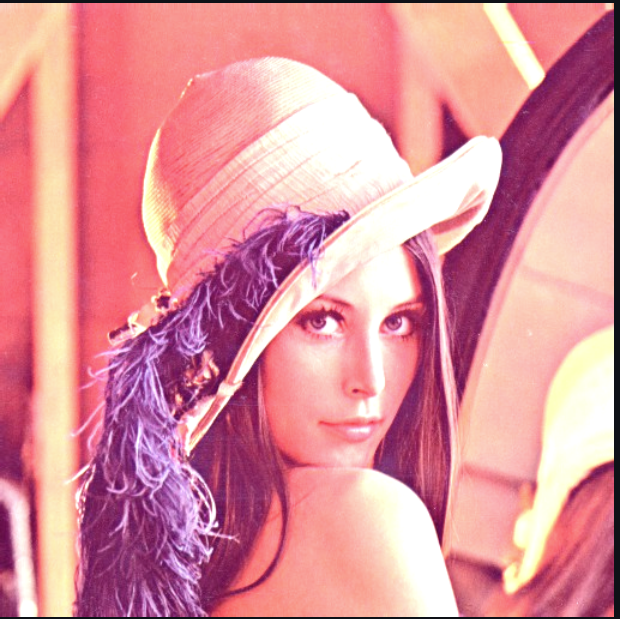
Below are the images resulting from some implementation features from the projects:
| Color inverse | Color melted | Color melted |
|---|---|---|
 |  |  |
| Gray inverse | Gray product | Color brighten |
|---|---|---|
 |  |  |